How Sneddy’s genre-defying Mumbai Western became one of the festival’s most unforgettable experiences
Every film festival has its discoveries. The films audiences leave talking about long after the credits roll. The works that challenge expectations, reinvent familiar genres, and remind us why cinema remains such a thrilling art form.
At this year’s Tribeca Festival, that film was Getar Hero.
The electrifying short from filmmaking duo Sneddy, the creative partnership of director Teddy Stern and producer Sneha Mehta, may not have walked away with the festival’s top short film prize, but it delivered something arguably more valuable: one of the most original cinematic visions to emerge from Tribeca’s 2026 lineup.
Screened as part of the festival’s shorts programme, Getar Hero takes the mythology of the American cowboy and drops it headfirst into the frenetic heart of Mumbai, creating a wildly inventive fusion of Western iconography, Bollywood energy, and urban survival drama.
The result is a film that feels entirely its own.
A Cowboy Lost in Mumbai
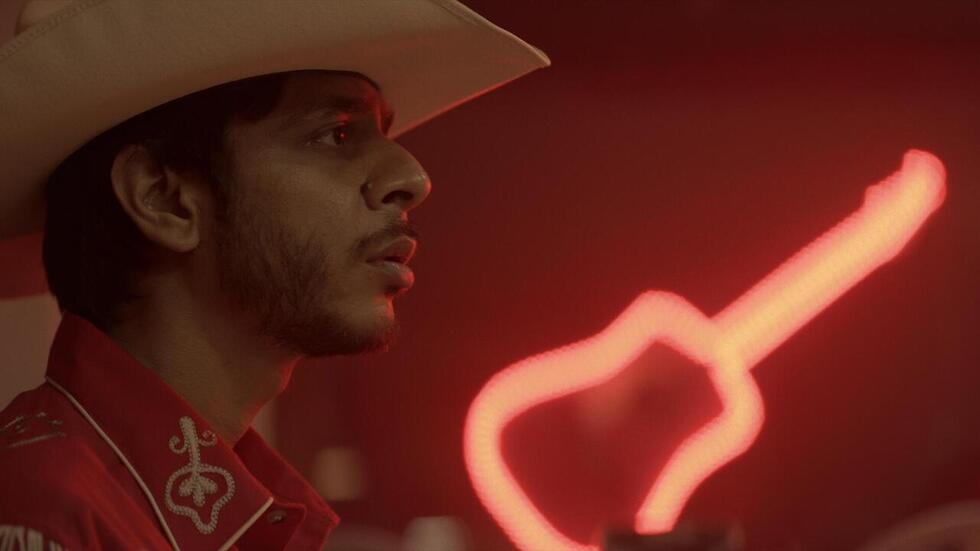
Starring acclaimed Indian actor Shashank Arora (Superboys of Malegaon, Made in Heaven, Titli), Getar Hero follows a down-on-his-luck cowboy who arrives in Bombay only to discover that his guitar and wallet have been stolen.
What follows is a desperate journey through the city’s dazzling neon-lit underworld as he races to recover the possessions that represent both his livelihood and identity.
It’s a premise that sounds delightfully absurd on paper. On screen, however, it becomes something unexpectedly poignant.
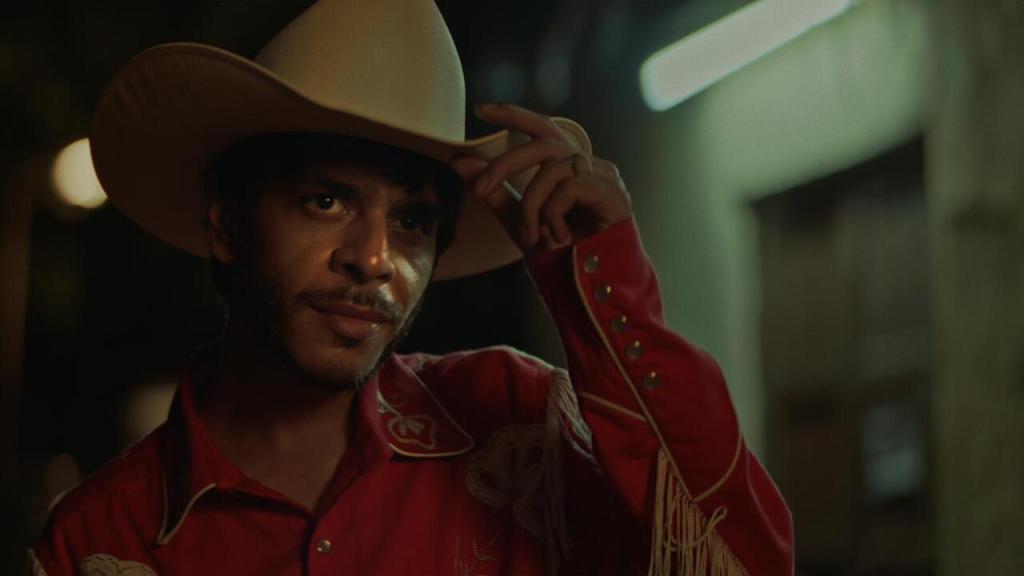
Arora delivers a magnetic performance as a man completely out of place, clinging to a mythological version of masculinity that no longer serves him. The cowboy hat, the swagger, the solitary hero complex—all of it begins to unravel as Mumbai forces him to confront a very different reality.
Reinventing the Western
The brilliance of Getar Hero lies in how it understands the Western not as a genre defined by geography, but by mythology.
“What is a Western without the West?” ask the filmmakers.
The answer, according to Sneddy, is a story about survival.
Where traditional Westerns celebrate rugged individualism, Getar Hero proposes something far more contemporary. In Mumbai, survival isn’t achieved through lone heroics but through collective endurance. Community replaces frontier conquest. Adaptation replaces domination.
The city itself becomes the film’s most compelling character.
Shot with kinetic energy and a vivid visual style, Mumbai is presented not as a backdrop but as an overwhelming force, chaotic, beautiful, unforgiving, and alive. Every frame pulses with colour and movement, creating a dreamlike atmosphere that blurs the line between musical fantasy and urban nightmare.
It’s a bold aesthetic gamble that pays off spectacularly.
Masculinity in the Wrong Movie
Beneath its genre playfulness, Getar Hero is also a thoughtful examination of masculinity and performance.
“I was thinking a lot about masculinity and performance,” says Stern. “So we put a cowboy in Mumbai. He’s not a traditional hero. He’s a guy in the wrong movie, wearing the wrong outfit, trying to survive.”
That idea becomes the emotional engine of the film.
The cowboy archetype has long represented a particular vision of masculinity—self-reliant, stoic, untouchable. By transplanting that figure into modern Mumbai, Stern and Mehta expose the fragility of those assumptions.
The protagonist isn’t conquering the frontier.
He’s trying not to be swallowed by it.
It’s a subtle but powerful inversion that gives the film surprising emotional depth beneath its energetic surface.
A Perfect Fusion of East and West
Part of what makes Getar Hero so memorable is the confidence with which it embraces contradiction.
The film borrows from American Westerns while celebrating Bollywood spectacle. It balances humour with melancholy, stylisation with authenticity, mythology with realism.
Many films attempt cultural fusion.
Few make it feel this effortless.
Sneddy’s years of experience working across India and the United States are evident throughout. Having previously created Destination: Bollywood, the first Indian reality competition series in North America, the filmmakers possess a unique understanding of both cinematic traditions.
Rather than choosing between them, they create something entirely new.
The Festival Standout
Tribeca has always championed emerging voices and bold storytelling, and Getar Hero embodies both.
In a festival crowded with strong work, it stood apart because it felt genuinely surprising. Every scene seemed to push the audience somewhere unexpected, refusing easy categorisation or familiar narrative comfort.
It’s the kind of short film that demonstrates why the format remains such a fertile space for innovation. Free from commercial expectations and feature-length conventions, Getar Hero embraces risk at every turn.
And it works.
By the time the credits roll, viewers have experienced something rare: a film that feels simultaneously playful, profound, culturally specific, and universally resonant.
Whether viewed as a Western, a musical, a satire, or a character study, Getar Hero succeeds because it understands that genre is not a set of rules but a language—and one that can be translated, transformed, and reinvented.
Tribeca showcased many remarkable shorts this year.
But few linger in the imagination quite like Getar Hero.
It may not have won the festival.
Yet in terms of ambition, originality, and sheer cinematic exhilaration, it felt very much like the winner.
Sonia Smith 5/5


Leave a Reply