
Jordan Kinley

In an era where British cinema is often split between period prestige and polished social realism, MAGID / ZAFAR arrives like a burn to the skin, immediate, unfiltered, and unapologetically rooted in lived experience. Directed by Luís Hindman and written by Hindman alongside Sufiyaan Salam, this blistering short has already cemented its cultural significance, winning at the British Independent Film Awards and earning a nomination at the BAFTA Awards. Official selections at the BFI London Film Festival and the Clermont-Ferrand International Short Film Festival have only amplified its international resonance.
But accolades are not what make MAGID / ZAFAR essential. Its importance lies in its insistence on telling a story that feels raw, specific, and undeniably British.
A Night in the Heat
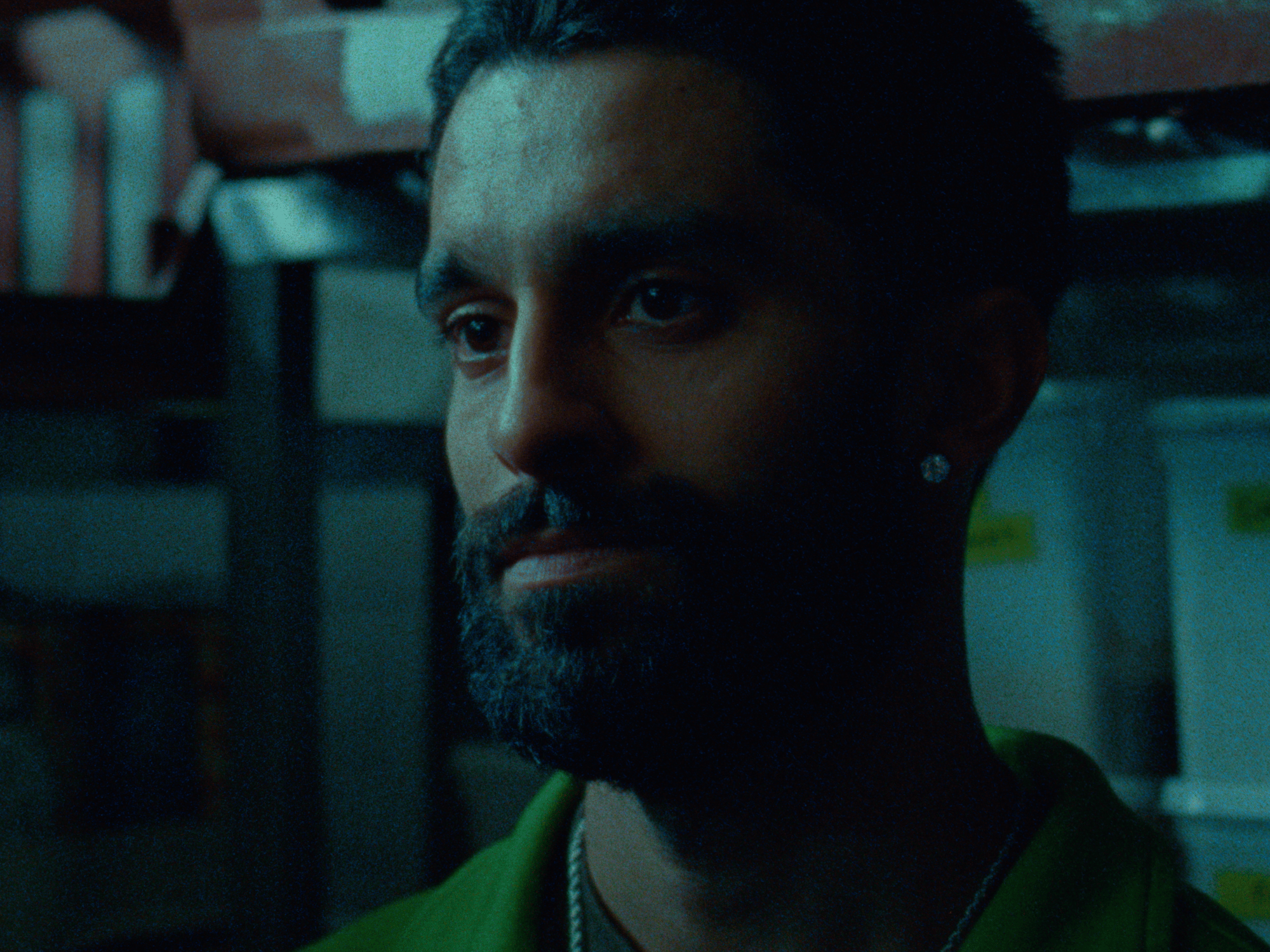
Set over one sweltering evening inside a British Pakistani takeaway, the film traps us in the claustrophobic choreography of the professional kitchen. The heat is oppressive, the air thick with grease and history. Childhood friendship lingers between Magid and Zafar like steam that refuses to clear.
What unfolds is not melodrama but something far more recognisable, the slow fracture of shared ambition, the quiet grief of diverging paths, the masculine silence that says everything by refusing to say anything at all.
Eben Figueiredo and Gurjeet Singh deliver performances of remarkable restraint. Their chemistry is lived-in, weighted by shared jokes and shared disappointments. There are no grand speeches. Instead, we get glances held too long, tempers that flare too quickly, and a mounting emotional pressure that mirrors the cramped walls around them.
Authenticity Without Apology
British cinema has long wrestled with questions of representation, but too often stories about South Asian communities are filtered through either stereotype or sociological distance. MAGID / ZAFAR rejects both.
Hindman, drawing from his own background, and Salam, whose debut novel WIMMY ROAD BOYZ is set for publication by Penguin Random House and Merky Books, craft a narrative steeped in cultural specificity. Yet the film’s emotional core is universal, identity, pride, resentment, love.
Crucially, it interrogates South Asian masculinity without flattening it. The brash, loud-mouthed British bad boy archetype is slowly peeled back, revealing insecurity and longing beneath. In doing so, the film challenges not only how South Asian men are portrayed on screen, but how British masculinity itself is defined.
Sound and Sweat
Hindman’s background in music video direction pulses through the film’s sonic identity. Contemporary Asian hip hop collides with traditional Pakistani qawwali, creating a soundscape where old and new cultural forces coexist, sometimes harmoniously, often uneasily.
Cinematographer Jaime Ackroyd’s kinetic camerawork keeps us uncomfortably close. The camera lingers in the narrow corridors of the takeaway, amplifying the suffocation of expectation. The space becomes metaphor, a place of labour, inheritance, and entrapment.
Why Real British Stories Matter
What makes MAGID / ZAFAR so significant within the landscape of contemporary British cinema is not simply its subject matter, but its refusal to dilute that subject matter for broader palatability.
There is no translation guide, no explanatory cushioning for audiences unfamiliar with the nuances of British Pakistani life. The film trusts its viewers. It asserts that stories grounded in cultural specificity are not niche, they are necessary.
In a cultural climate where representation risks becoming a marketing strategy rather than a creative commitment, MAGID / ZAFAR feels defiantly sincere. It does not posture as an “issue film.” It simply tells the truth of two young men navigating friendship, heritage and diverging futures under fluorescent kitchen lights.
Winning at the BIFAs and earning BAFTA recognition signals more than industry approval. It suggests a hunger for work that is emotionally fearless and culturally grounded.
With MAGID / ZAFAR, Hindman and his collaborators announce themselves as a formidable new creative force. More importantly, they remind us that the future of British cinema lies not in polish, but in honesty, in stories that sweat, bruise, and breathe.
 Arts Muse Magazine