

By Roman Neeson, Arts Muse Magazine


In an industry in which stories of difference have too often been filtered through cliché, Daniel Persitz’s Key of Genius arrives as both a cinematic statement and a cultural corrective. Based on the true story of blind, autistic musical savant Derek Paravicini, who also happens to be the Queen of England’s nephew, the short film enters the Oscar-qualifying race not merely as an awards hopeful, but as a vibrant argument for the value of authentic neurodiverse representation on screen.
Adapted from In the Key of Genius, the celebrated biography penned by Derek’s long-time mentor Adam Ockelford, the film dramatizes their decades-long journey with striking intimacy. Far from casting Derek as a symbol or spectacle, Key of Genius foregrounds the simple, radical truth that brilliance can emerge from unexpected places, and that the right support can turn raw, unshaped talent into something transcendent.
A New Vocabulary for Neurodiversity on Screen
What distinguishes Key of Genius within the contemporary landscape of disability and neurodiversity narratives is its absence of pity and its refusal to simplify. Too often, film has framed neurodiversity through two narrow lenses, the “tragic burden” or the “miraculous exception.” Persitz’s film avoids both. Derek is shown as neither helpless nor superhuman, but as a complex young person whose gift for music exists alongside real challenges.
In doing so, the film joins a slowly growing canon of works including Temple Grandin, The Reason I Jump, and Life, Animated, which advocate for a more nuanced, human-centered perspective. Key of Genius contributes a crucial new dimension, the recognition that neurodiverse artistry is not created in a vacuum but fostered through connection, patience, and long-term mentorship.
The Transformative Power of Mentorship
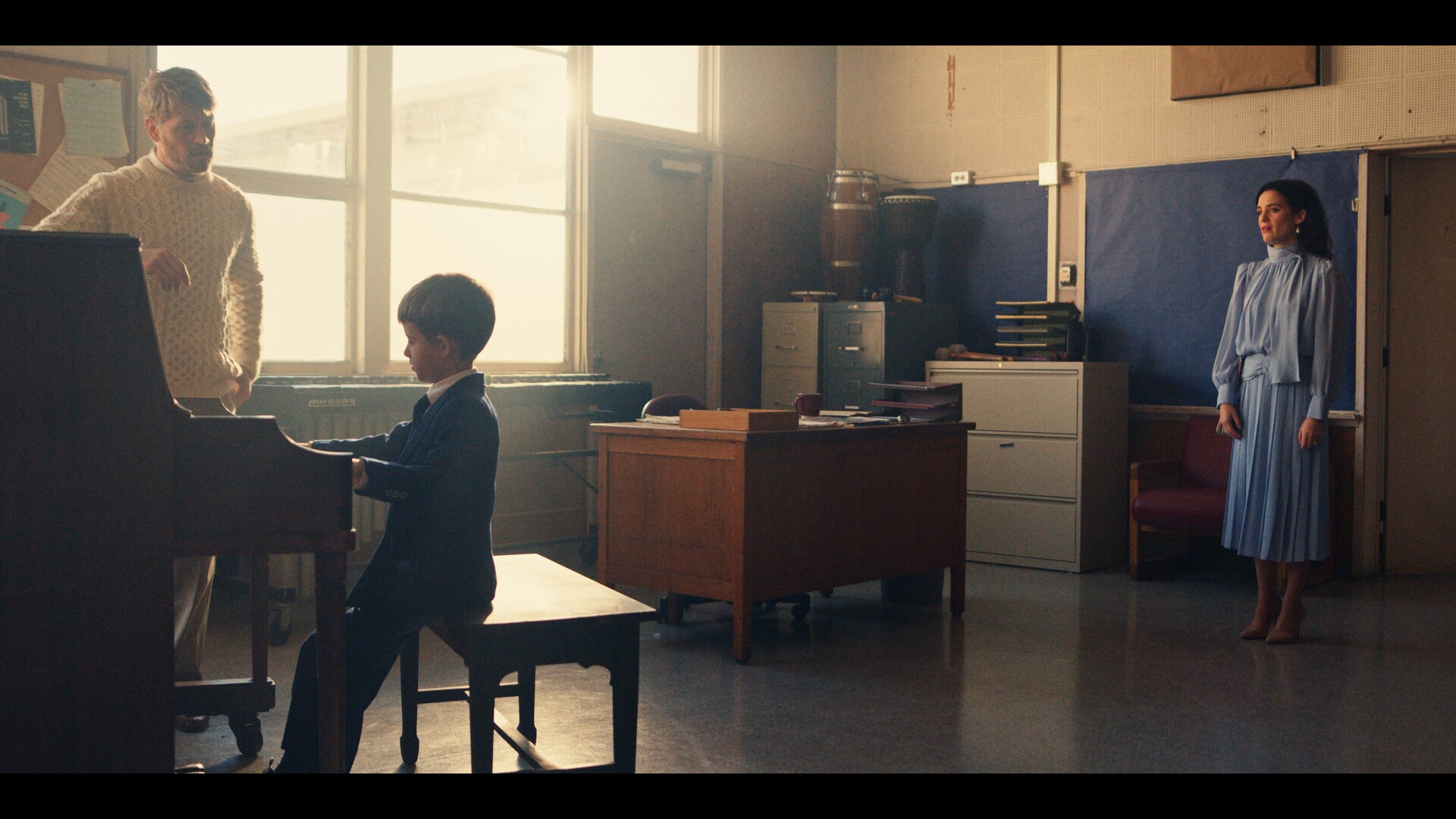
Derek’s musical genius may be innate, but Key of Genius makes clear that unlocking it required an ally. Adam Ockelford, portrayed with grounded compassion, recognizes Derek’s aptitude early on and commits to shaping it. Their dynamic becomes the heartbeat of the film.
This relationship, as rendered by Persitz and co-writer David Seidler, echoes a broader truth about neurodiversity, potential is often overlooked not because it isn’t there, but because systems and expectations fail to nurture it. Ockelford’s belief in Derek becomes a counter-narrative to marginalization, a reminder that advocacy can be the difference between limitation and liberation.
A Film with Emotional Precision and Cultural Weight
Visually, the film’s style is crisp and purposeful, matching its thematic clarity. Persitz guides the camera with a sensitivity that mirrors the subject matter, avoiding melodrama in favor of stillness and close attention, qualities that respect Derek’s interiority rather than projecting assumptions onto it.
It is no surprise that festivals have responded enthusiastically. Following its premiere at the Cleveland International Film Festival and a sold-out screening at Los Angeles’s HollyShorts, Key of Genius has collected additional recognition from Raindance and the Los Angeles Diversity Film Festival. Its trajectory toward 2026 Oscar consideration feels not only deserved, but emblematic of a broader shift in what stories audiences are eager to champion.
Why Key of Genius Matters Now
Representation is most powerful when it deepens our collective vocabulary for understanding difference. Key of Geniusdoes exactly that. It reframes neurodiversity not as a narrative complication to overcome, but as part of the vast spectrum of human possibility. By celebrating Derek’s brilliance and Ockelford’s devotion, the film asserts that talent and disability are not opposites, and that mentorship remains one of the most profound forces for equity.
At a time when Hollywood is increasingly, if unevenly, examining who gets to be seen and celebrated, Persitz’s film offers a model for how to tell stories rooted in authenticity, respect, and genuine curiosity. It argues that neurodiverse individuals deserve not just visibility, but complexity, not just inclusion, but investment.
With the support of executive producers Sandro Monetti, David Treatman, and Chris Oakland of Grapevine Films, Key of Genius positions itself as more than a festival darling. It stands as an invitation, to widen our lens, to rethink old narratives, and to recognize the brilliance that emerges when talent meets trust.
In celebrating Derek Paravicini’s extraordinary gift, Key of Genius ultimately celebrates something even larger, the unbounded possibilities that arise when we choose to see, support, and believe in one another.
 Arts Muse Magazine