
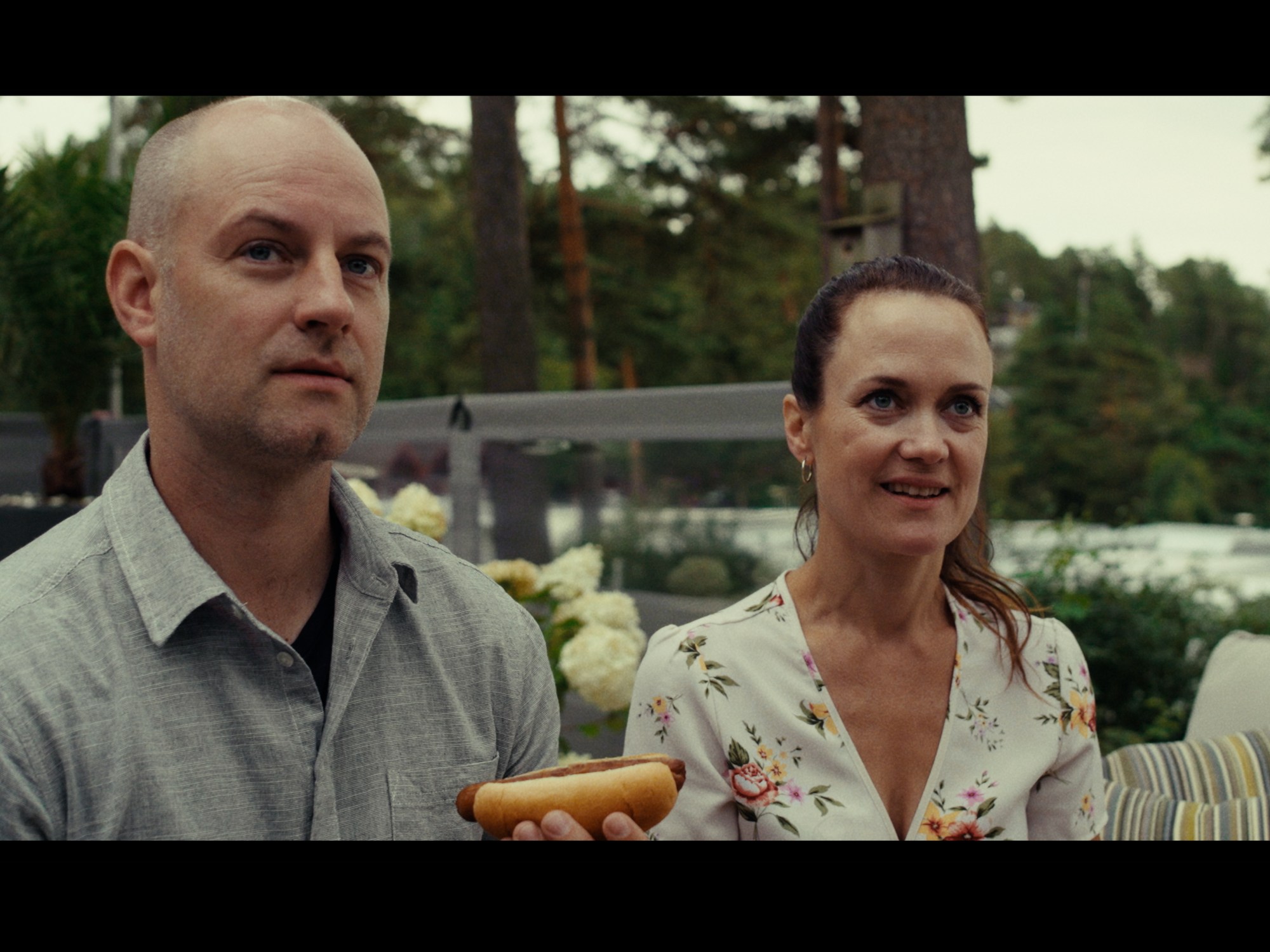
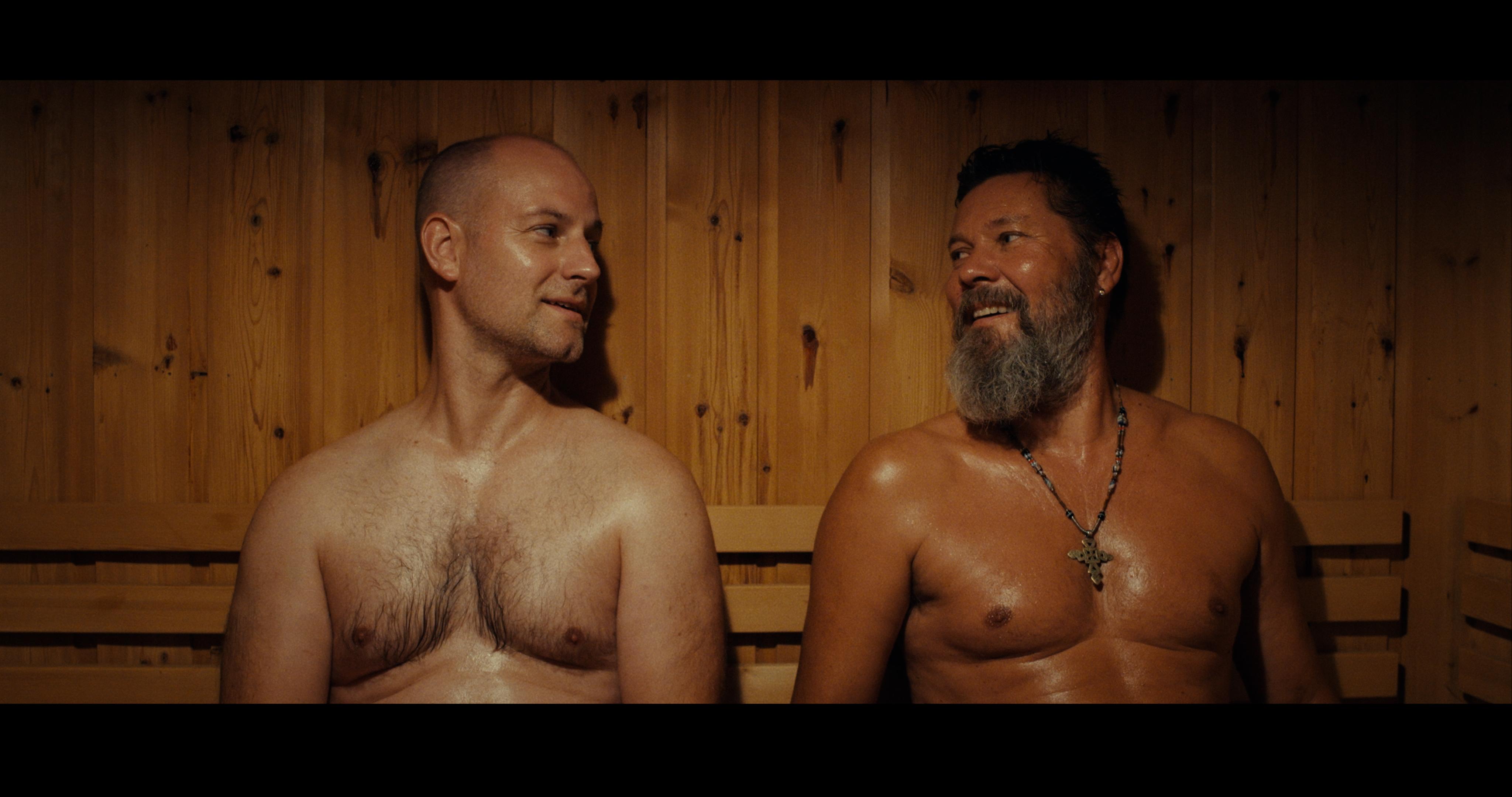
With Camping in Paradise, Norwegian director Eirik Tveiten doubles down on the quietly rebellious charm that earned him an Oscar nomination for Night Ride. His new short is a quirky-cool, sunbaked comedy of discomfort, one that plays like a Nordic take on The White Lotus stripped of all cynicism (and, occasionally, clothing). It’s breezy, sharp, and unexpectedly soulful, the kind of festival darling that sneaks up with a grin and leaves you thinking far longer than its runtime would suggest.
The premise alone is irresistible, a buttoned-up philosopher and his girlfriend land, accidentally, at a nudist campsite for the night. In lesser hands, this would be pure gag territory, but Tveiten approaches the scenario with a sly wink and an anthropologist’s curiosity. What unfolds is a gently anarchic comedy of manners, where the naked bodies turn out to be the least exposed thing on screen. The real nudity comes from the couple’s unraveling emotional armor, prodded loose by a disarmingly cheerful pair of longtime nudist hosts who embody the kind of breezy confidence the protagonists can barely fake.

There’s a delightful oddball rhythm to the film. Scenes unfold with the casual unpredictability of real life, tiny misunderstandings, too-long pauses, the kind of offbeat humor that emerges when everyone’s slightly embarrassed but trying very hard not to show it. Tveiten has always excelled at this quiet comedic tension, and here he pushes it just far enough to feel deliciously awkward, never mean.
The performances match the film’s off-kilter vibe. Espen Alknes and Mona Grenne give their characters a wonderfully brittle earnestness, while Oddrun Valestrand and Stig Henrik Hoff exude the inviting weirdness of people who’ve shed more than their clothes, they’ve shed self-consciousness. Cinematographer Gisle Bjørneby shoots the campsite like a postcard of gentle eccentricity, full of warm light and unfussy naturalism that keeps the film grounded even at its quirkiest.
What makes Camping in Paradise especially cool, though, is its refusal to moralize or sensationalize. Tveiten’s nudist setting isn’t a punchline, it’s a narrative tool, a metaphor with a mischievous spark. He uses it to poke at modern anxieties about bodies, relationships, and authenticity, but he does so with the lightest touch. The film’s philosophy, fittingly for a story about a philosopher, is playful rather than ponderous. It invites conversation without demanding thesis statements.
The short’s festival success, from Annapolis to Breckenridge and selections at Tribeca, Palm Springs, and Sedona, feels like a natural extension of its vibe. This is the kind of film audiences love discovering, small but clever, funny but meaningful, offbeat yet deeply human.
In the growing constellation of Tveiten’s work, Camping in Paradise shines as a charmingly odd little star, proof that he remains one of Norway’s coolest, quirkiest, and most emotionally astute filmmakers. As Oscar season speculation heats up, don’t be surprised if this warmly eccentric short sneaks into the conversation wearing nothing but confidence.
 Arts Muse Magazine